

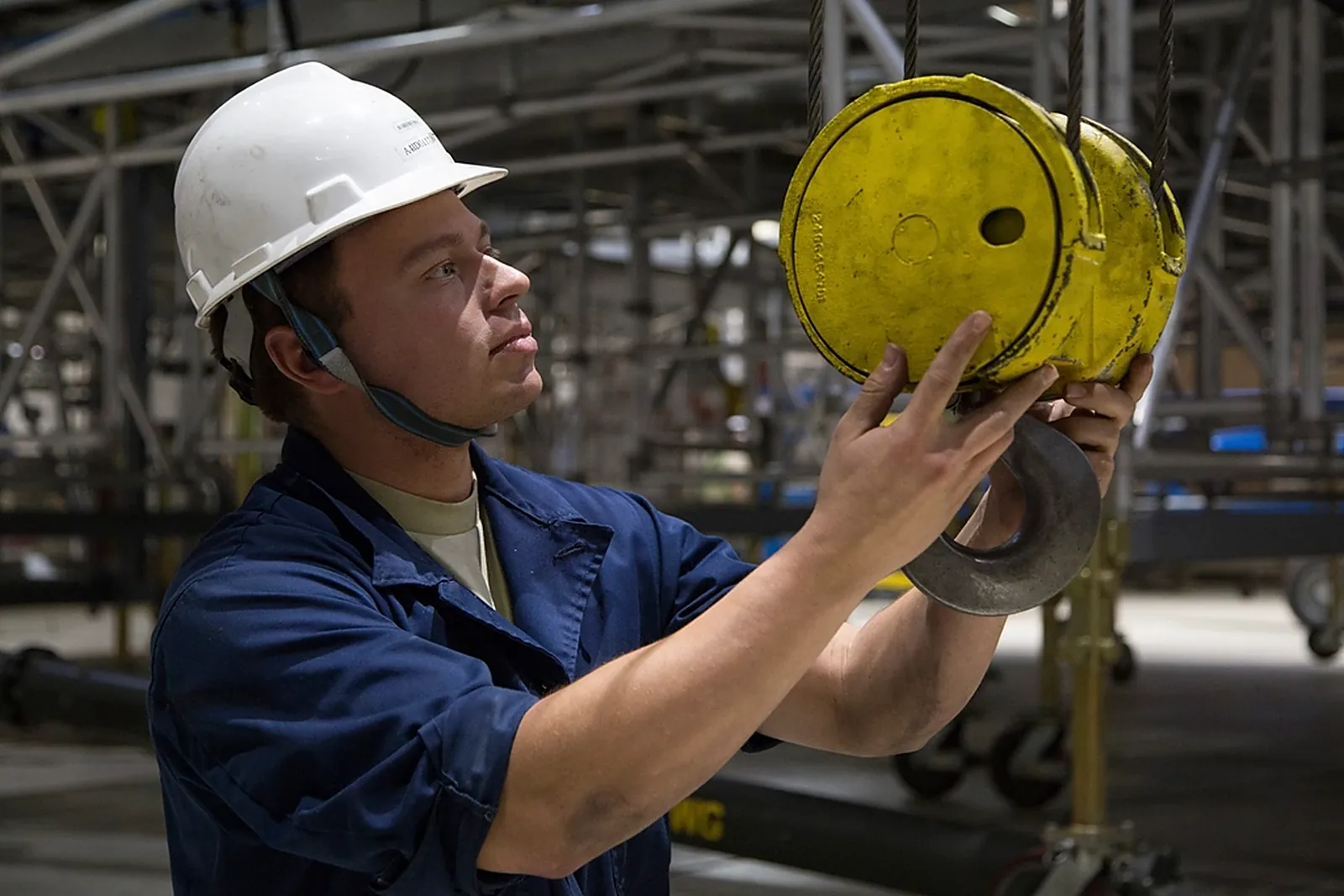
ISO 9001 consulting
We build your quality management system so that it works in day-to-day operations, prepare you for the audit and coordinate certification with an independent accredited body. One contact, one roadmap with dates.
2–4 months to the certificate, 1 contact through to the certificate, 3 years of certificate validity and 500+ companies since 2008.
Since 2008, we have guided 500+ companies to certification, including these:
5.0reviews on Google






Three situations behind almost every project
In the free initial consultation we first clarify your situation, then the effort. If an audit date cannot be met, we name the earliest realistic one – instead of confirming a preferred date that falls apart in the stage 1 audit.
It takes longest not where documents are missing, but where responsibilities are unclear: documents can be written, responsibility has to be decided.
- A customer requires the certificate – by a set date
- We plan backwards from the audit date and tell you in the initial consultation whether it is achievable.
- The system has grown, but is not audit ready
- A manual from the 2008 edition, records spread across drives and people’s heads. We assess against the current standard and shorten rather than rebuild.
- A tender requires proof
- Public clients and large corporations require ISO 9001. Without a certificate, you cannot take part.
How implementation works
Six phases from the initial assessment to the certificate, each with a verifiable result.
- Step 1
Gap analysis
1–2 weeksWe assess your processes against the current ISO 9001:2026. The result is a task list with owners and deadlines.
- Step 2
System design
2–3 weeksProcess map, process owners, KPIs – derived from your workflows, not from a template.
- Step 3
Documentation
3–5 weeksOnly what clause 7.5 requires. We adopt and shorten what already exists.
- Step 4
Training and roll-out
4–6 weeksTraining based on your own processes, until the first records are produced.
- Step 5
Internal audit and management review
1–2 weeksWe find the nonconformities before the external auditor does.
- Step 6
Certification audit
1–2 weeksThe external, independent certification body audits in stages 1 and 2 and issues the certificate. We agree the dates and are there with you.
- Project week0481216
The phases overlap. In total about 2 to 4 months, depending on size, number of sites and the state of documentation.
What we take on
- Gap analysis with a concrete task list
- Document structure, templates and process descriptions
- Training for managers and process participants
- Internal audit and preparation of the management review
- Selecting the certification body accredited by DAkkS or GAC together with you
- Agreeing audit scope and dates with the certification body
- Support during the stage 1 and stage 2 audits and follow-up of nonconformities
What stays with you
- Defining the quality policy and quality objectives (clauses 5 and 6.2)
- Naming one responsible person per process
- Access to documents, KPIs and operations
- Reviewing and approving documents
- Taking part in training, the internal audit and the certification audit
What the audit depends on
The standard does not audit your binders, but your processes
In the stage 2 audit, the auditor goes into operations. They ask the person running the process how they work and compare the answer with your documentation. If the two differ, a nonconformity arises – no matter how carefully the manual is written.
That is why we build the system from your real workflows – with records that are produced in day-to-day business.
Clause 4.4 processes and interactions, Clause 7.5 documented information, Clause 9.2 internal audit and Clause 9.3 management review.

How much does ISO 9001 certification cost?
Consulting and certification together, net plus VAT and travel expenses. After the free initial consultation you receive a fixed price in a written quote.
Included
Consulting by Verinorm
- Gap analysis, system set-up, documentation
- Training, internal audit, audit preparation
- Coordination of and support during the audit
- One contact through to the certificate
Included
Audit and certificate
- External, independent certification body
- Stage 1 and stage 2 audit, approval and certificate
- Certificate valid for 3 years
- Usually invoiced directly by the body
In the quote we show the consulting and certification shares separately.
| Criterion | Effect on consulting | Effect on certification |
|---|---|---|
| Effective number of employees | More processes, more training. | The most important factor for audit time (IAF MD 5). |
| Number of sites | Separate assessment and training per site. | Multi-site audit, partly with sampling. |
| Existing documentation | The biggest lever: well-maintained documents shorten implementation. | Hardly any effect on audit days. |
| Industry and additional rules | Additional requirements, such as IATF 16949, increase the effort. | Higher complexity category. |
| Further standards in the same project | Shared clauses only once. | A combined audit reduces audit days. |
Implementing ISO 9001 and ISO 14001 together
We introduce both certificates in one project – or add ISO 14001 to your existing QMS later, without setting up the documentation from scratch.
- Shared clauses only once
- Context, leadership, resources, internal audits and improvement apply to both standards. Clause 8 and the environmental aspects remain specific to each standard.
- One audit instead of two
- The certification body assesses both in a combined audit. This reduces audit days and travel costs.
- One set of documentation, one audit programme
- One set of processes, one management review, one audit programme – instead of two systems side by side.
Why Verinorm
We supported the transition from the 2008 to the 2015 edition in more than 500 projects and know where transition projects fail. The same experience goes into preparing for ISO 9001:2026.
- Certification with the right body
- We work with several independent certification bodies accredited by DAkkS or GAC and select the right one together with you.
- One consultant from analysis to audit
- The same contact throughout the project – and at your side in the audit when questions of interpretation arise.
- Documentation that stays lean
- We document what clause 7.5 requires – often a fraction of what was maintained before.
Transition to ISO 9001:2026
A moderate revision, not an upheaval like 2015. We transition your system by means of a delta review and agree with your certification body in which audit the transition takes place – usually the next scheduled surveillance or recertification audit. Whether additional audit time is needed is decided by the certification body.
Status: ISO 9001:2026 published on 16 Sep 2026, transition rules of the Global ACI dated 4 Sep 2026.
| Criterion | Change | Action required |
|---|---|---|
| 4.1 / 4.2 | The climate change addition from Amendment 1:2024 moves into the text of the standard. | No new effort if you have already implemented the amendment. |
| 5.1 | New item on quality culture and ethical behaviour. | Prepare evidence: management communication, training, how errors are handled. A mission statement on the wall is not enough. |
| Annex A | Considerably expanded guidance on clauses 4 to 10. | Not subject to audit, but the basis for argument on questions of interpretation. |
| Clauses 4–10 | Clarifications, no new clause structure. | Existing documentation remains usable. A delta review instead of a rebuild. |
Timeline
- Feb 2024
- Amendment 1:2024 in force
- 16 Sep 2026
- ISO 9001:2026 published
- 31 Mar 2028
- Initial certification only to the 2026 edition
- 30 Sep 2029
- End of the transition period
Not yet certified: now or wait?
Now – and directly to the 2026 edition. We build new systems against the current standard. Whether the certification audit can already take place to the 2026 edition depends on whether the chosen certification body is already accredited for it; we clarify this during selection. Those who postpone lose the ability to take part in tenders without saving any effort.
Already certified: what applies until then
Until the transition, audits continue against ISO 9001:2015 with Amendment 1:2024. The new edition becomes the audit basis as soon as you have agreed the transition with your certification body – by 30 September 2029 at the latest.
A common misconception: that the climate change requirement is new with the revision. It has applied since February 2024. Anyone who has not assessed it has an open requirement of the standard today.
Training
A system only works if the workforce knows it
We do not teach the standard, but your employees’ processes – at the workplace, with the documents they will use afterwards. Clauses 7.2 and 7.3 require exactly that: competence and awareness, evidenced rather than claimed.
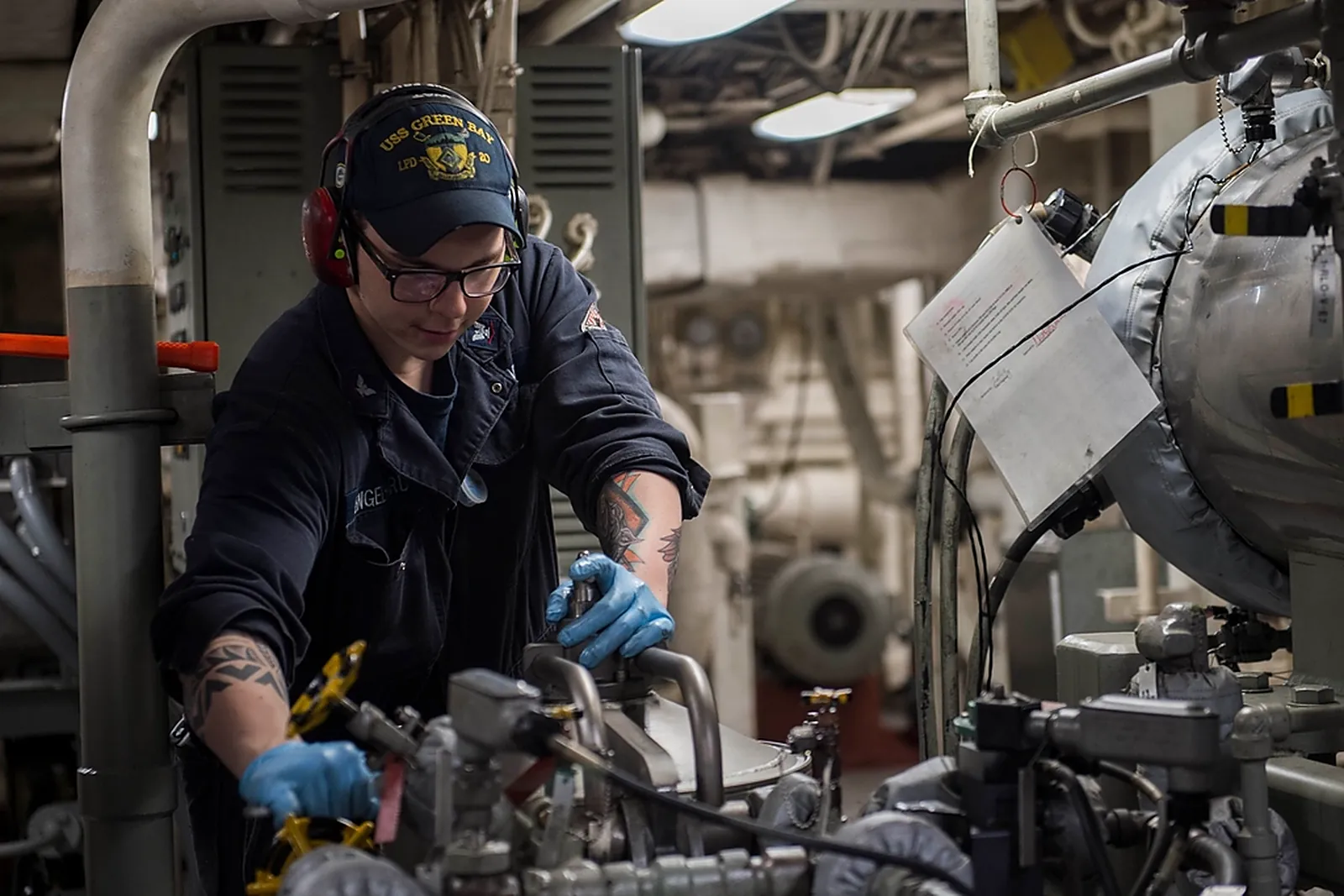
ISO 9001 in detail
Requirements of the standard, documentation obligations and KPIs – expand them when you need them.
What is ISO 9001?
ISO 9001 is the internationally recognised standard for quality management systems. It defines requirements that help organisations consistently deliver high-quality products and services – across all industries, from craft businesses to large corporations.
The current edition is ISO 9001:2026, published on 16 September 2026. Certificates to ISO 9001:2015 including Amendment 1:2024 remain valid until the end of the transition period on 30 September 2029. Assessing climate change as a possible context factor has been subject to audit since the 2024 amendment.
Because ISO 9001 follows the High Level Structure, in practice it is almost always the first standard in a company and later becomes the framework of an integrated system. Context, leadership, resources, audits and improvement can then be managed together with ISO 14001 or ISO 45001 instead of maintaining each system separately.
What does the standard require? Clauses 4 to 10
The standard follows the High Level Structure and is therefore built in the same way as ISO 14001, ISO 45001 and other standards. Certification is against clauses 4 to 10.
| Clause | Content |
|---|---|
| Clause 4 | Context, interested parties, scope, processes |
| Clause 5 | Leadership, quality policy, roles and responsibilities |
| Clause 6 | Risks and opportunities, quality objectives, planning of changes |
| Clause 7 | Resources, competence, communication, documented information |
| Clause 8 | Operation: quotation, design and development, purchasing, delivery |
| Clause 9 | Monitoring, measurement, internal audit, management review |
| Clause 10 | Nonconformities, corrective action, continual improvement |
Documented information: what clause 7.5 really requires
A quality manual has not been mandatory since the 2015 edition. The standard speaks of “documented information” and distinguishes between information to be maintained (requirements) and information to be retained (records). You decide on scope, form and medium.
This misunderstanding is the most common reason for oversized management systems. We regularly see 80-page manuals that nobody reads, while required records are missing – for example on the competence of employees or the evaluation of suppliers.
| To be maintained (requirements) | To be retained (records) |
|---|---|
| Scope of the QMS (4.3) | Evidence of employee competence (7.2) |
| Quality policy (5.2) | Assessment of risks and opportunities (6.1) |
| Quality objectives (6.2) | Product and process monitoring (8.5, 9.1) |
| Information to support processes (4.4) | Evaluation and selection of external providers (8.4) |
| — | Results of internal audits (9.2) and the management review (9.3) |
| — | Nonconformities and corrective actions (10.2) |
What matters in the audit is not the volume, but whether the documentation actually reflects the processes and whether the required records are available.
Process map and process approach (clause 4.4)
Clause 4.4 requires you to determine the processes needed for the quality management system, define their interactions and control them. A process map is the usual form of this evidence – it is not mandatory.
In practice, this point rarely fails because of the diagram, but because of missing process owners and missing metrics. A diagram without named responsibility and without a KPI does not meet 4.4.
| Process group | Typical content |
|---|---|
| Management processes | Strategy, quality policy and objectives, management review, resource planning |
| Core processes | Quotation, design and development, purchasing, production or service delivery, customer service |
| Support processes | HR, maintenance, IT, monitoring of measuring equipment, document control, internal audits |
What a process needs as a minimum under 4.4: inputs and expected outputs, a process owner with decision-making authority, sequence and interaction with other processes, at least one performance indicator, the resources and competences needed, and the risks and opportunities of the process under clause 6.1.
KPIs in quality management (clause 9.1)
Clause 9.1 requires you to monitor, measure and evaluate the performance of the QMS. Which KPIs you use is up to you – but they must fit your quality objectives and actually lead to decisions.
| KPI | Calculation | What it shows |
|---|---|---|
| Complaint rate | complaints / units delivered | process control from the customer’s perspective |
| On-time delivery (OTD) | on-time / total deliveries | reliability of planning and capacity |
| First pass yield | defect-free units in the first pass / total quantity | process capability without rework |
| Rework and scrap costs | cost of defective output / revenue | commercial impact of quality defects |
| Processing time for nonconformities | average days from recording to effectiveness check | functioning of continual improvement under clause 10.2 |
| Audit findings per audit | number, by severity | maturity of the system over time |
| Achievement of quality objectives | objectives achieved / agreed | basis of the management review under 9.3 |
Five to eight KPIs for the overall system make sense, plus one per core process. The most common audit finding: KPIs are collected but not evaluated. Clause 9.1.3 requires analysis and evaluation of the results – a series of figures without a documented conclusion is not enough.
The seven quality management principles
- Customer focus
- Understanding and meeting requirements – the most important driver of commercial success.
- Leadership
- Management sets the direction and leads by example. Without it, the QMS stays on paper.
- Engagement of people
- Competent, empowered employees at all levels. Evidence of competence is relevant to the audit.
- Process approach
- Managing interrelated processes instead of optimising departments. A core requirement of the standard.
- Improvement
- Continual improvement as an ongoing task, driven by the PDCA cycle.
- Evidence-based decision making
- Decisions based on data and analysis, not on impressions.
- Relationship management
- Evaluating and developing suppliers and partners – clause 8.4 requires evidence of this.
ISO 9001 in your industry
ISO 9001 is worded to be industry-neutral. In implementation, however, the requirements differ considerably – above all where additional rules or customer standards apply.
- Automotive
- Direct OEM suppliers usually need IATF 16949. This standard requires ISO 9001 and adds the control plan, FMEA, MSA and production part approval. For tier 2 or tier 3 suppliers, ISO 9001 is usually sufficient; whether IATF is required follows from the customer contract.
- Medical devices
- Here ISO 13485 is the industry-specific standard. It is far more regulatory in focus and relevant to the CE conformity assessment under the MDR. ISO 9001 is often maintained in addition when customers outside the regulated sector require it.
- Construction and skilled trades
- The trigger is usually prequalification for public contracts. Audit focus areas are the control of subcontractors under clause 8.4, monitoring of measuring equipment and evidence of competence. The documentation has to work on the construction site, not just in the office.
- Mechanical engineering and metalworking
- The classic use case in the Stuttgart region. Focus areas are process capability, batch traceability, measuring equipment management and control of production changes. Often combined with ISO 14001 and ISO 45001 in an integrated system.
Depending on your activities, the risk assessment under Section 5 of the German Occupational Safety and Health Act (ArbSchG) (in German) is also relevant, as is ISO 22000 where food is involved.
The PDCA cycle in ISO 9001
Plan, Do, Check, Act is the control logic of the standard: plan quality objectives and risks (clause 6), implement processes and build competence (7 and 8), measure and audit results (9), derive corrections and improve the system (10). We align the cycle with your existing dates – management review, annual planning, internal audit – instead of introducing an additional series of meetings.
Frequently asked questions about ISO 9001 consulting and certification
Costs, process, division of roles, duration and version of the standard.
How long does ISO 9001 certification take?
How much does ISO 9001 certification cost?
Which version of ISO 9001 currently applies?
What changes with ISO 9001:2026?
How long is the transition period to ISO 9001:2026?
What requirements does ISO 9001 place on companies?
Do I need a quality manual for ISO 9001?
How is the certification body selected?
What does Verinorm do, and what does the certification body do?
How can ISO 9001 be integrated into corporate strategy?
What is the difference between ISO 9001 and IATF 16949?
What is the difference between ISO 9001 and ISO 14001?
Is ISO 9001 certification mandatory for my company?
How often does ISO 9001 certification have to be renewed?
What is checked in the surveillance and recertification audits?
How do I evidence training and instruction under ISO 9001?
Which nonconformities are most common in ISO 9001 audits?
Further standards we support: ISO 14001 environmental management, ISO 45001 occupational health and safety, ISO 27001 information security, ISO 50001 energy management and ISO 22000 food safety. We are based in Ludwigsburg and support companies throughout Germany, Austria and Switzerland.
Ready for your ISO 9001 certification?
We start with the gap analysis against ISO 9001:2026 and agree with the certification body which edition the audit will be based on.
- Gap analysis with a concrete task list, not a traffic-light chart
- Roadmap to the certification audit with dates
- Fixed price in a written quote, consulting and certification shown separately

Reply within one business day. The initial consultation is free and without obligation.